
Brightening / Melasma / Redness / BlemishesVisible Dilated Capillary Management, Capillary Vascular Laser!

Visible Dilated Capillary Management, Capillary Vascular Laser!
Improve visible capillaries and vascular redness! Using a 1064nm long-pulsed laser, laser energy is precisely applied to specific blood vessels to coagulate the vessels, allowing the red visible vessels to naturally fade over time. If you've been concerned about reddish blood vessels around your nose or on your cheeks, this can help to even out your skin tone. *VAT excluded
Options
Treatment Details




Are you bothered by the sight of red, fine blood vessels around your nose or cheeks? You might be wondering about the reasons for these capillaries and the possibility of improving them.
Telangiectasia refers to a condition where small blood vessels beneath the skin dilate, appearing on the skin surface as fine, red or purplish lines.
Once dilated and visible to the naked eye, these blood vessels may be difficult to restore with general cosmetics or simple skin soothing treatments alone.
The 1064nm long-pulsed redness laser precisely delivers thermal energy to dilated blood vessels, selectively coagulating them. These coagulated vessels are naturally absorbed by the body over time, which can help gradually reduce the appearance of visible capillaries. This 1064nm Nd:YAG laser is primarily used for photo-coagulation and hemostasis of vascular lesions, and is also applied to improve symptoms associated with telangiectasia or rosacea.
This is an approach that goes beyond simply covering red skin; it directly manages the visible red blood vessels themselves.
What is the Capillary Redness Laser?
The 1064nm long-pulsed redness laser is a treatment that primarily targets blood vessels rather than the pigments that determine skin color.
When laser energy delivers heat to dilated blood vessels, their walls are selectively coagulated, which has the effect of blocking blood flow.
Immediately after the procedure, blood vessels may temporarily constrict or appear darker. However, the coagulated vessels are naturally processed by the body over time, allowing the visible capillaries to gradually fade.
As the red lines fade, you can expect your uneven skin tone to improve and become more uniform.
This is a vascular management procedure designed to directly improve the distinct capillaries appearing around the nose and on the cheeks.
Why 1064nm Long-Pulsed?
The 1064nm wavelength can relatively effectively reach deep into the skin. This can be usefully applied to improve thick, dilated blood vessels clearly visible on the sides of the nose or cheek areas.
The long-pulsed method works by consistently delivering heat to the blood vessels for a certain period, slowly heating and coagulating the vessel walls.
According to research on patients with facial telangiectasia, both 1064nm long-pulsed Nd:YAG laser and pulsed dye laser showed improvement. There are reports that the 1064nm long-pulsed laser, in particular, may show a more significant response in thickly dilated blood vessels.
Capillary Redness Laser Approach
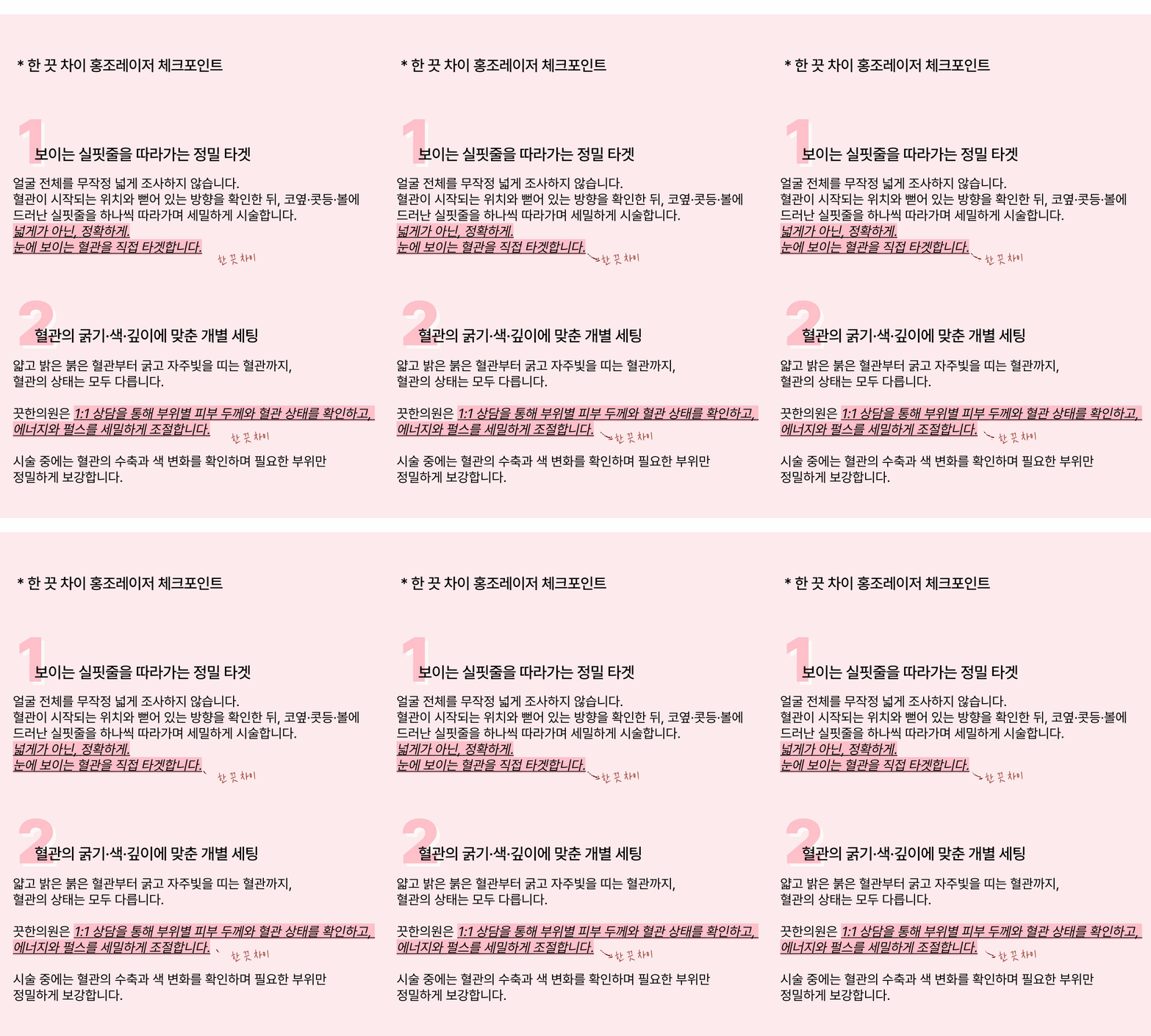
Prior to the redness laser treatment, the medical staff carefully observes the areas where capillaries are visible, such as around the nose, nasal bridge, cheeks, and chin. After confirming the thickness, color, and depth of the blood vessels, the laser is precisely applied along the vessel's path.
1. Treatment Directly Following Visible Capillaries
Capillary redness often does not involve uniformly red skin, but rather fine, dilated blood vessels extending in various patterns.
Rather than treating the entire red area broadly, the medical staff identifies the starting points and directions of the blood vessels, meticulously tracing each visible capillary during the procedure.
2. Customized Settings According to Vascular Characteristics
Capillaries appearing on the face have diverse characteristics. There are various types, including thin and bright red vessels, thick and dark vessels, and vessels that appear purplish deep within the skin.
Therefore, rather than applying the same output and pulse settings to all blood vessels, it is crucial to carefully adjust the energy intensity and delivery time, taking into account the thickness, color, depth, and skin thickness of each vessel.
After thorough consultation to assess the vascular condition of each area, the medical staff adjusts the settings to deliver appropriate thermal energy to the necessary vessels while avoiding unnecessary irritation to the surrounding normal skin.
3. Real-time Adjustment Based on Vascular Response
When appropriate energy is applied, blood vessels may constrict or their color may lighten during the procedure, and some vessels might temporarily appear darker.
The medical staff observes these vascular responses in real-time, replenishing energy to necessary areas and delicately adjusting the treatment to prevent excessive energy overlap on the same spot.
Observing the vascular response, the procedure is precisely carried out only as much as needed.
The focus is on precisely improving the appearance of visible capillaries.
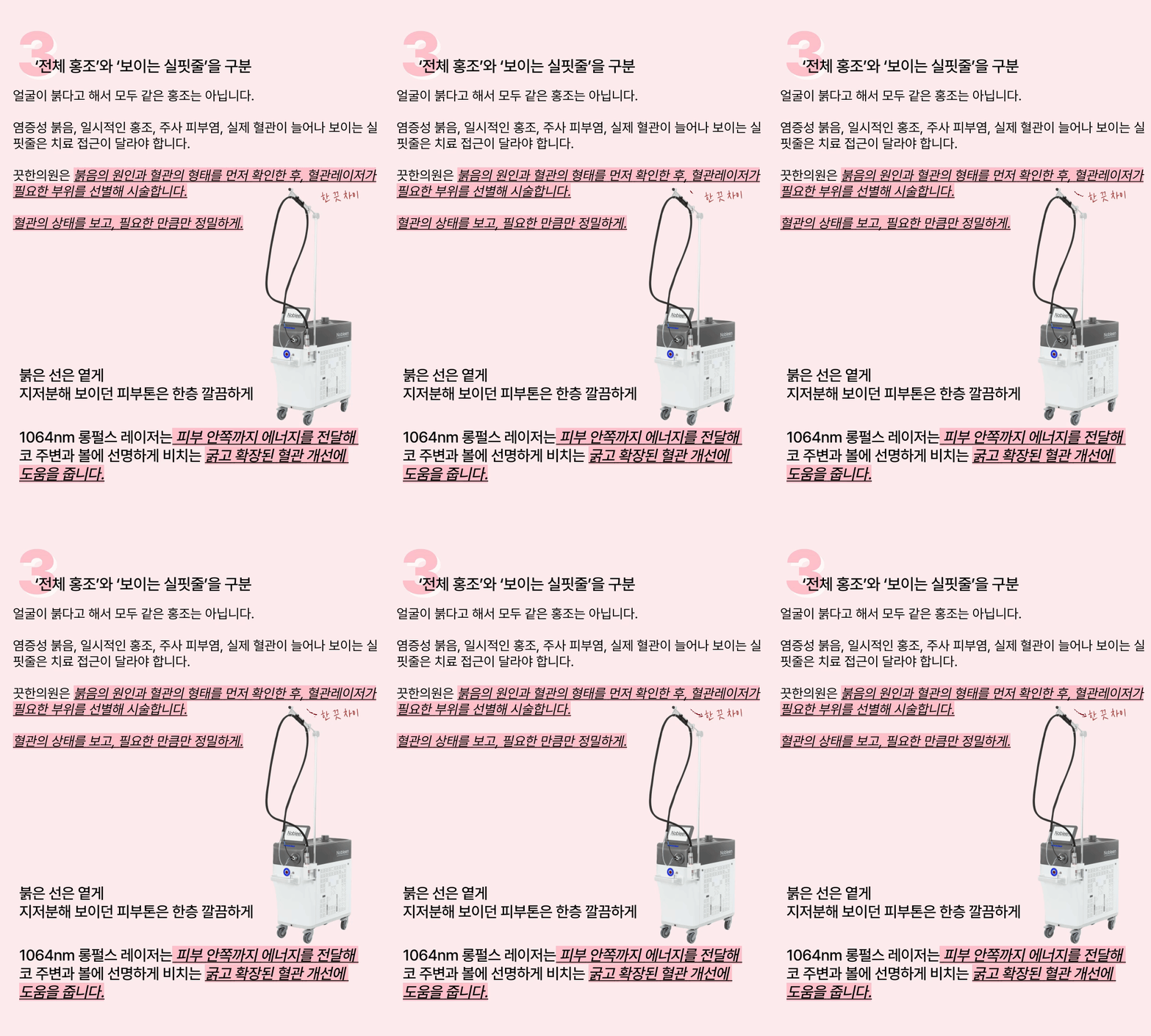
4. Differentiating 'General Redness' and 'Capillaries'
The symptoms of a red-looking face do not all stem from the same cause.
Redness that momentarily appears due to temperature changes or emotions, redness caused by dermatitis or inflammation,
Redness accompanied by rosacea, and redness appearing as capillaries due to dilated blood vessels, each require different treatment approaches.
Specifically, the 1064nm long-pulsed laser can be effective in improving prominent thick blood vessels around the nose or on the cheeks. However, for faint, widely spread redness or fine superficial vessels, other combined treatment methods may be necessary.
Rather than simply applying a vascular laser just because the "face is red," the medical staff first thoroughly identifies the exact cause of the redness and the form of the blood vessels.
Features of Capillary Redness Laser Treatment
It focuses on managing red capillaries appearing on the sides of the nose and on the cheeks.
It can help improve the condition by selectively coagulating dilated blood vessels.
It is possible to deeply manage even thick and clearly visible blood vessels.
Output is custom-adjusted according to the thickness and depth of the blood vessels.
This procedure reduces the size of dilated blood vessels.
It can help improve the appearance of dilated blood vessels visible around the nose, on the bridge of the nose, cheeks, and chin.
The procedure is performed after carefully examining the direction in which each individual's blood vessels extend.
Unlike general pigment lesion lasers, this procedure focuses on treating vascular issues.
It can also help manage telangiectasia (spider veins) caused by rosacea.
The 1064nm long-pulsed Nd:YAG laser is known to have a positive effect on improving telangiectasia (spider veins) that appear on the face or around the nose. However, the effectiveness of the procedure and the number of treatment sessions required may vary depending on the thickness of the blood vessels and the patient's skin condition. Therefore, it is best to discuss specific details thoroughly with experienced medical staff before making a decision.
You may consider this procedure in the following situations:
If red, fine blood vessels are clearly visible around the nose.
If noticeable red capillaries spread like a spider web on the cheeks.
If you are concerned because red vascular lines are not well covered even with makeup.
If red blood vessels are particularly prominent in specific areas rather than all over the face.
If you are concerned that dilated blood vessels around your nose make it look like you've been drinking.
If fine vascular issues persist despite consistent skin soothing care.
If you have rosacea symptoms along with dilated capillaries around your nose.
If relatively thick blood vessels, appearing red or purplish, are clearly visible.
If you want to improve capillary issues that create an uneven skin tone.
Procedure Steps
Step 1. Cleansing
Thoroughly remove makeup residue and impurities from the skin surface.
Step 2. Individual Consultation with a Specialist
Identify the cause of the patient's redness and thoroughly diagnose the location, thickness, color, and depth of the capillaries.
Step 3. Vascular Lesion Treatment Plan
Carefully examine the direction of visible capillaries around the nose, on the bridge of the nose, cheeks, and chin.
Step 4. Pre-procedure Area Protection and Skin Check
Before the laser procedure, ensure eyes are safely protected and reconfirm the patient's skin condition.
Step 5. 1064nm Long-Pulsed Laser Application
Considering the thickness and depth of the dilated blood vessels, the procedure is performed with customized adjustments to energy and pulse settings.
Step 6. Post-procedure Vascular Response Check
Immediately after the procedure, check for changes in blood vessel color and degree of constriction. Additional procedures may be considered depending on the situation.
Step 7. Post-procedure Skin Soothing with Jaungo Modeling Pack
A Jaungo modeling pack is applied to soothe any heat and redness that may occur on the skin due to the procedure.
Post-Procedure Precautions
ㆍImmediately after the procedure, some redness, warmth, mild stinging, and swelling may temporarily occur.
ㆍThe treated vascular area may temporarily appear darker or turn purplish-red.
ㆍBruising or purpura may occur depending on the individual's skin condition or the thickness of the blood vessels.
ㆍRarely, changes such as blisters, scabs (eschar), or hyperpigmentation may appear, so please be careful not to pick at scabs intentionally.
ㆍAvoid vigorously rubbing or stimulating the treated area with massage.
ㆍOn the day of the procedure, it is best to avoid high-temperature saunas, jjimjilbangs (Korean bathhouses), hot baths, and strenuous exercise.
ㆍAlcohol consumption and irritatingly spicy or hot foods can worsen redness, so it is recommended to refrain from them for a few days.
ㆍIt is important to apply moisturizer generously and consistently use sunscreen.
If discomfort or swelling in the treated area gradually worsens, it is advisable to contact the clinic.
Q&A
Q. Can spider veins disappear after laser treatment?
The 1064nm long-pulsed laser specifically delivers energy to dilated blood vessels, aiming to reduce visible spider veins.
Immediately after treatment, some blood vessels may contract and appear lighter or less prominent. However, some blood vessels may temporarily appear darker before gradually improving over time.
However, depending on the thickness, depth, and area of the lesion, it is possible that not all spider veins will be completely eliminated with a single treatment.
Q. Can I expect results after just one treatment?
While individual responses may vary, some people experience noticeable changes after just one treatment.
However, if you have multiple branching blood vessels or vessels located at various depths, multiple treatment sessions may be required.
Indeed, studies on telangiectasia around the nose often analyze results observed after repeated treatments.
Therefore, it is advisable to consult thoroughly with medical staff to determine the appropriate number of treatment sessions for your individual case.
Q. Do spider veins disappear immediately after treatment?
Depending on the condition of the blood vessels, they may contract immediately after treatment and appear lighter. However, sometimes they may temporarily appear darker or reddish-brown.
It takes time for coagulated blood vessels to be naturally absorbed by the body, so it is best to assess the final results after the skin has fully stabilized.
Q. How does it differ from general laser toning?
Laser toning treatments primarily focus on melanin pigment and are used to improve skin concerns such as melasma, blemishes, and hyperpigmentation.
In contrast, a spider vein and redness laser targets visible red blood vessels and proceeds by coagulating those vessels.
Therefore, brown blemishes are treated with pigment lasers, while red spider veins are managed with vascular lasers.
Ultimately, each treatment addresses different skin concerns.
Q. Can overall facial redness also be improved?
Among the various causes of facial redness,
If the redness on your face is caused by dilated blood vessels, this treatment can be expected to provide improvement.
However, if redness is accompanied by various complex factors such as inflammation, dermatitis, reactions to temperature changes, or neurogenic flushing, simply removing spider veins may not completely eliminate all redness.
Specifically, the 1064nm long-pulsed laser can be effectively used for thick and dilated blood vessels. On the other hand, for faint and widely spread redness, a combination treatment involving Genesis Toning, exosomes, Potenza, and others may be more suitable.
Q. Is treatment possible even with rosacea?
If you have symptoms of rosacea accompanied by telangiectasias on the nose or cheeks, you may consider treatment to reduce visible blood vessels.
However, symptoms such as inflammatory reactions, burning sensations, papules, and pustules caused by rosacea may be difficult to fully resolve with vascular laser alone. Therefore, it is advisable to proceed with other treatment methods in conjunction, based on a precise diagnosis from your medical team.
Q. Can I expect treatment results for spider veins on the side of the nose?
Yes, the sides of the nose and the bridge of the nose are common areas where spider veins appear relatively thick and clear.
Specifically, the 1064nm long-pulsed laser is a useful treatment for improving thick and widely spread vascular lesions around the nose.
Q. How much pain can I expect during the treatment?
When the laser energy reaches the blood vessels, you may feel a stinging sensation on the skin, similar to a hot rubber band snapping.
The intensity of this pain can vary depending on the thickness of the blood vessels, the treated area, the strength of the applied energy, and individual pain sensitivity.
During the treatment, a powerful gas cooling device operates simultaneously, which can alleviate most pain to a tolerable level.
Q. Can bruising or purpura occur?
Depending on the treatment settings or the patient's vascular condition, temporary redness, swelling, bruising, or purpura may occur.
It is a common and natural temporary phenomenon for treated blood vessels to appear darker for a short period.
Q. When can I start wearing makeup and washing my face?
You can gently and lightly wash your face on the day of the treatment, and you can also comfortably apply makeup.
However, on the day of treatment, it is recommended to avoid vigorously rubbing the skin or using abrasive products such as scrubs or peeling products that could cause irritation.
Q. Many people wonder if the improved broken capillaries from treatment can reappear over time.
Even if capillaries have been coagulated and removed by treatment, various factors can work together, such as the skin's natural aging process, repeated UV exposure, stimulation from high temperatures, frequent alcohol consumption, and a tendency towards skin conditions like rosacea.
Due to these factors, new capillaries may form in adjacent areas or existing vessels may dilate again, becoming visible.
Therefore, even after treatment, it is necessary to continue consistent lifestyle management, such as paying careful attention to sun protection and reducing exposure to hot environments.
Vascular Laser Procedure Steps
첫 상담부터 마무리까지의 실제 진행 순서를 확인하세요.
- 01
Before the procedure, cleanse your skin by washing your face yourself.
- 02
The skin condition is accurately diagnosed with a Mark-Vu device.
- 03
Identify the blood vessel areas requiring treatment and establish a treatment plan.
- 04
The laser is set according to the individual's skin and vascular condition, and the procedure is performed.
- 05
After the procedure, the vascular response is checked.
- 06
The procedure is concluded by applying soothing cream and regenerative cream to the skin.
시술 기본정보
시술 시간, 마취, 회복, 유지기간을 한 번에 확인하세요.
TIME
Within 15-30 minutes
ANESTHESIA
No anesthesia
RECOVERY
Immediate return to daily life
Ideal For
One Fine Difference makes real results.
- KKEUT POINT 01
Those with spider-web-like red veins spread across their cheeks.
- KKEUT POINT 02
Those with particularly prominent red blood vessels in specific areas of the face.
- KKEUT POINT 03
Those who wish to improve capillaries that make their skin texture appear rough.
Q&A
고객님들이 가장 많이 물어보시는 내용을 모았습니다.
Is it possible to improve capillaries with just one session?

The effectiveness of the treatment can vary by individual. Some people experience changes even with a single session. However, if the blood vessel distribution is complex or varies in depth, multiple sessions may be necessary. In cases like telangiectasia around the nose, many instances show improvement after repeated treatments. It is best to consult with medical staff to determine the appropriate number of sessions for each individual.
What are the differences between vascular laser and laser toning?
Laser toning primarily targets melanin pigments and is used to manage hyperpigmentation such as melasma and blemishes. In contrast, capillary vascular laser mainly targets dilated red blood vessels within the skin, delivering laser energy to induce coagulation. Simply put, pigment lasers are suitable for brown pigmented lesions, while vascular lasers are suitable for red vascular issues, meaning the two procedures have different objectives.
Will capillaries disappear immediately after treatment?
Depending on the condition of the blood vessels, they may contract and lighten immediately after the procedure. However, sometimes they may temporarily become redder or purplish-red. This is because it takes time for the laser-treated blood vessels to coagulate and then be absorbed by the body. Therefore, it is advisable to observe the final changes when the treated area has recovered and stabilized.
Cautions
Results = Treatment × Aftercare. Please follow the notes below.
Redness, warmth, slight tingling, or swelling may temporarily occur in the treated area.
After the procedure, the vascular area may temporarily appear darker or change to a purplish-red color.
Depending on skin condition or vessel thickness, small bruises or purpura may appear.
Rarely, blisters, small scabs, or pigment changes may occur. If scabs form, do not forcibly remove them; allow them to fall off naturally.
Avoid rubbing or massaging the treated area vigorously.
On the day of the procedure, it is advisable to avoid saunas, jjimjilbangs (Korean bathhouses), hot baths, and strenuous exercise.
As redness may worsen, please refrain from alcohol and spicy or hot foods for a few days after the procedure.
Focus on skin moisturizing and consistently use sunscreen when going outdoors.